Blog



Plan a private karaoke party in Dubai with guest song requests and time for dinner. Discuss an invitation-only evening at Someone’s House in Al Quoz.
Your private karaoke party in Dubai needs a song list that suits the invited guests and a host who can keep the microphone moving between willing singers. Start by asking who wants a solo and who prefers a duet. Match the available singing time to those replies, then discuss the audio setup with the venue team. Someone’s House in Al Quoz supports private karaoke gatherings within its invitation-led event offering. The evening can include dinner, with karaoke beginning after guests have had time to talk.
Friends who happily sing along from a sofa may feel differently when someone calls their name and hands them a microphone in front of colleagues. Ask for volunteers in the invitation reply. Keep solo performances optional throughout the evening, and welcome guests who prefer to listen. Duets offer another way to participate, particularly for friends who already share a favorite song.
Your invitation can explain the planned format in a few sentences so guests know how much singing the evening will involve and when dinner will begin. Request a preferred song with the reply, alongside the original artist’s name. Hosts can then identify repeated choices or an especially popular decade. Musical preferences provide useful preparation; a guest’s willingness to perform still deserves confirmation on the night. For a duet, the friends can decide who sings the opening verse and where they will share the chorus. Check whether the selected lyric video identifies different vocal parts. The playback operator can explain how those cues appear on the display during the rehearsal.

Karaoke arrangements can differ from the recordings guests know, so the person preparing playback should check requested tracks against the actual catalog selected for the event. Ask the supplier to confirm the available languages and lyric display. Obtain approval for the proposed catalog’s use at the event. The venue team can clarify which provider will manage playback and which arrangements require a separate quotation.
Guests often remember a radio edit, yet the available karaoke arrangement may follow a longer album recording with an extended instrumental passage. Preview the version with the person who requested it. Agree on a second choice for songs that require another arrangement. Familiarity with the opening helps a singer recognize the first vocal entry after the music begins.
The host should review the lyrics against the guest group’s expectations and discuss any sensitive song choices privately with the person who requested them before the gathering. Family celebrations may call for different selections than an adults-only reunion. Mixed-language groups can submit requests in their preferred languages. Confirm that the chosen playback system displays those lyrics correctly during the rehearsal.
Guests who volunteer early should have a reasonable opportunity to sing, so assign one person to manage requests while another operates the audio system. Explain how singers join the queue. Invite guests to select one initial song, with repeat performances following the first round. The host can offer a duet slot when two friends request the same track.
For a hypothetical evening, suppose twelve guests choose songs averaging four minutes, and each changeover takes one minute; the karaoke session would occupy roughly sixty minutes. Longer arrangements increase that estimate. Dinner and conversation need their own time within the booking. Use the actual selected track lengths when preparing the running schedule, then leave a margin for a late singer or a playback interruption.
Late arrivals may want to join after the first round begins, and the host needs a simple way to accept their requests while honoring the existing queue. Keep a written list beside the playback operator. Confirm the next singer between songs so that person can finish a conversation and reach the performance position. Requests for a second appearance can remain on a separate list until the first round ends.

The person handling sound should hear the backing track and a volunteer’s voice together during a rehearsal scheduled within the agreed venue access period. Test the microphones intended for the evening. Ask the operator to check the vocal balance from the audience’s seating positions. Softer voices may need a different adjustment from louder singers, so include contrasting voices in the check.
Shure’s advice for handheld vocal microphones explains that useful microphone distance varies with the singer and the equipment, which makes a brief rehearsal worthwhile for first-time participants. Let the audio operator demonstrate a suitable position. Singers can practice a few lines at their intended volume, then receive feedback from the technician. The advice concerns microphone technique; the venue team confirms the equipment supplied for a particular booking.
The House’s event terms reserve technical-system operation for authorized personnel and require prior approval for outside equipment, so discuss a visiting karaoke supplier during booking. Confirm who provides the playback system. Ask the team to review the proposed connection and any additional equipment. The host can manage the guest queue while the appointed technician handles sound adjustments.
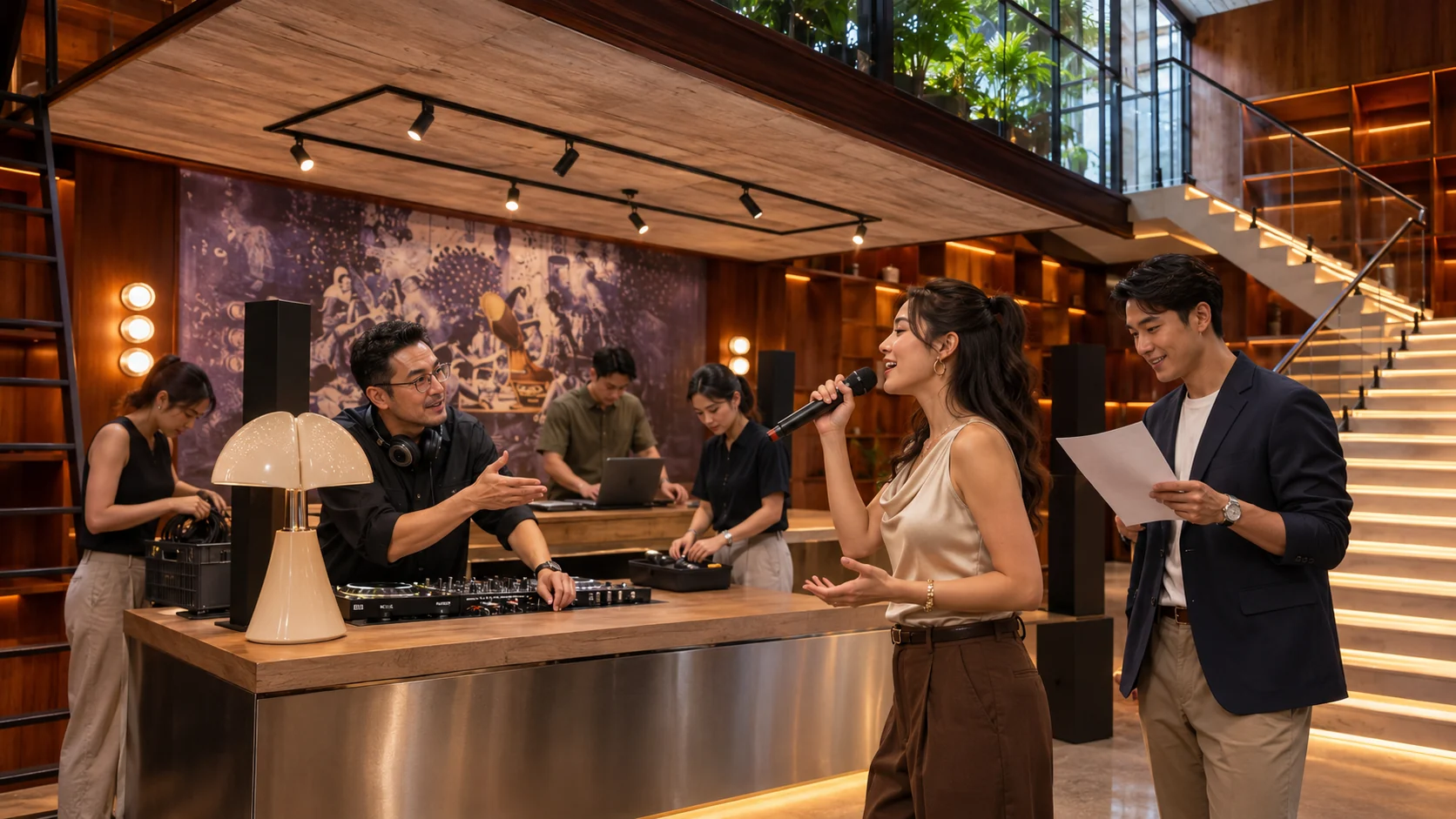
Singers need to read the lyrics comfortably while facing their guests, which means the screen arrangement deserves a test from the actual performance position. Ask the team to play a sample track. Check text size at the intended viewing distance and inspect the display in the proposed event lighting. For a duet rehearsal, check whether both singers have a usable view.
Furniture placement should leave a straightforward route between the guests’ seats and the singing position, especially when people are carrying drinks during the evening. Agree on that route with the venue team. Reserve a nearby surface for drinks away from technical equipment. Guests waiting for their turn can remain seated until the host invites them forward. The current singer then has the performance area to themselves.
Your playback operator should rehearse how a track begins and how the next selection is loaded on the same device that will be used for the event. Check the permitted backup arrangements with the supplier. Agree on a short music break if playback needs attention. The host can invite conversation during that pause and resume the queue after the operator confirms the system is ready.
Karaoke can follow a meal or occupy two shorter sessions; choose the format according to how much time guests want to spend talking during the private gathering. Someone’s House discusses dinner followed by music in its article on private dining and entertainment. Use that format as a starting point for the booking discussion. Confirm the meal arrangements and the approved food provider’s access.
Guests arriving from work may appreciate a conversation period before the first performance, especially when the invitation includes people meeting for the first time. Start with background music at a level agreed with the venue team. Introduce the karaoke host once guests have settled. The first volunteer can choose a familiar song that they feel comfortable singing, with friends ready to join the chorus from their seats.
Dinner service and microphone handovers both require people to move through the same gathering, so review their timing together with the person coordinating hospitality. Schedule a pause in performances when a meal needs the audience’s attention. Resume after the host checks that the next singer is ready. Water should remain easy for guests to reach throughout the evening.

Private karaoke often involves people trying something outside their usual routine, so explain the proposed photography arrangements in the invitation and repeat them at arrival. Ask guests for permission ahead of recording their performances. Confirm permission again before posting any identifiable footage. The host can arrange an optional group photograph during a break for guests who want a keepsake.
Someone assigned to photography should know which guests have agreed to appear and which parts of the event the host wants photographed for private use. Discuss how the files will be delivered to those guests. Keep the intended audience specific when seeking permission. Your colleague may welcome a photograph in a private group chat and prefer their singing video to remain personal.
Someone’s House offers a private-event setting in Al Quoz, with karaoke among the formats its team can discuss for an invited guest group. Share the proposed date and guest count through the venue booking page. Describe how much time you expect to allocate to singing. Add the requested language support and clarify whether dinner forms part of the evening.
The final booking discussion should confirm the access period and the person responsible for audio, with preparation time included in the agreed event schedule. Review any separately quoted additions with the team. Set a final-song time that leaves enough time for guests to collect their belongings. The host can then prepare the first-round request list and confirm the opening volunteer’s song.