Blog


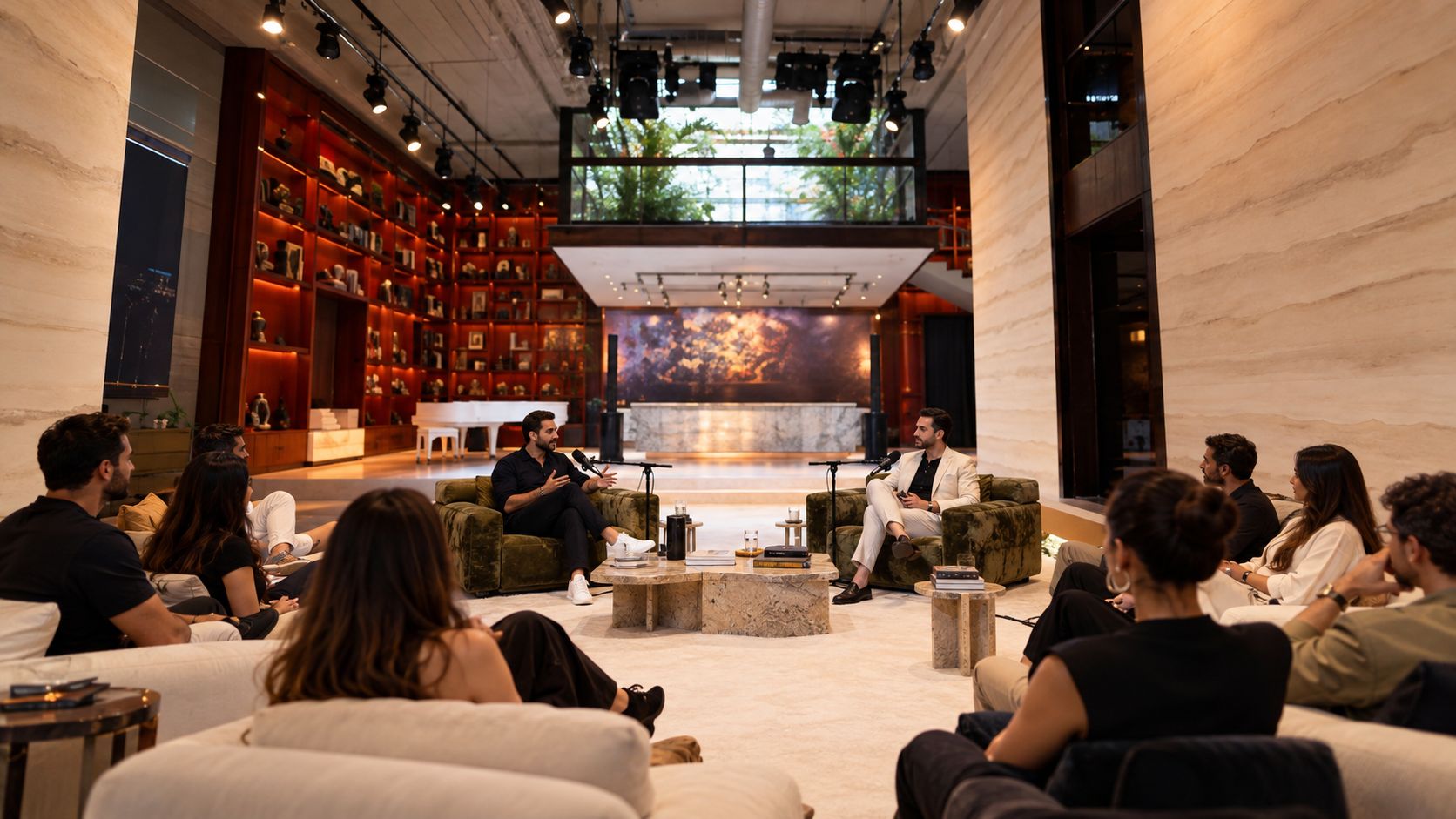
Plan a live podcast recording in Dubai with an invited audience. Discuss guest questions and episode production at Someone’s House in Al Quoz.
Listeners attending a live podcast want to hear the conversation as it happens and follow the unexpected question a guest's answer invites from the host. For a podcast recording venue in Dubai, assess how the proposed audience will participate alongside the recording arrangements. Someone's House accommodates podcast recordings within its private event venue in Al Quoz. Inside the residential interior, an invited group can hear the conversation and spend time with its speakers after the recording.
The producer needs an episode plan that accounts for nearby listeners, especially when the published program will include their questions. Decide where audience participation belongs in the conversation and how it will be recorded. For an episode built around a guest interview, reserve a distinct period for questions after the host has developed the subject.
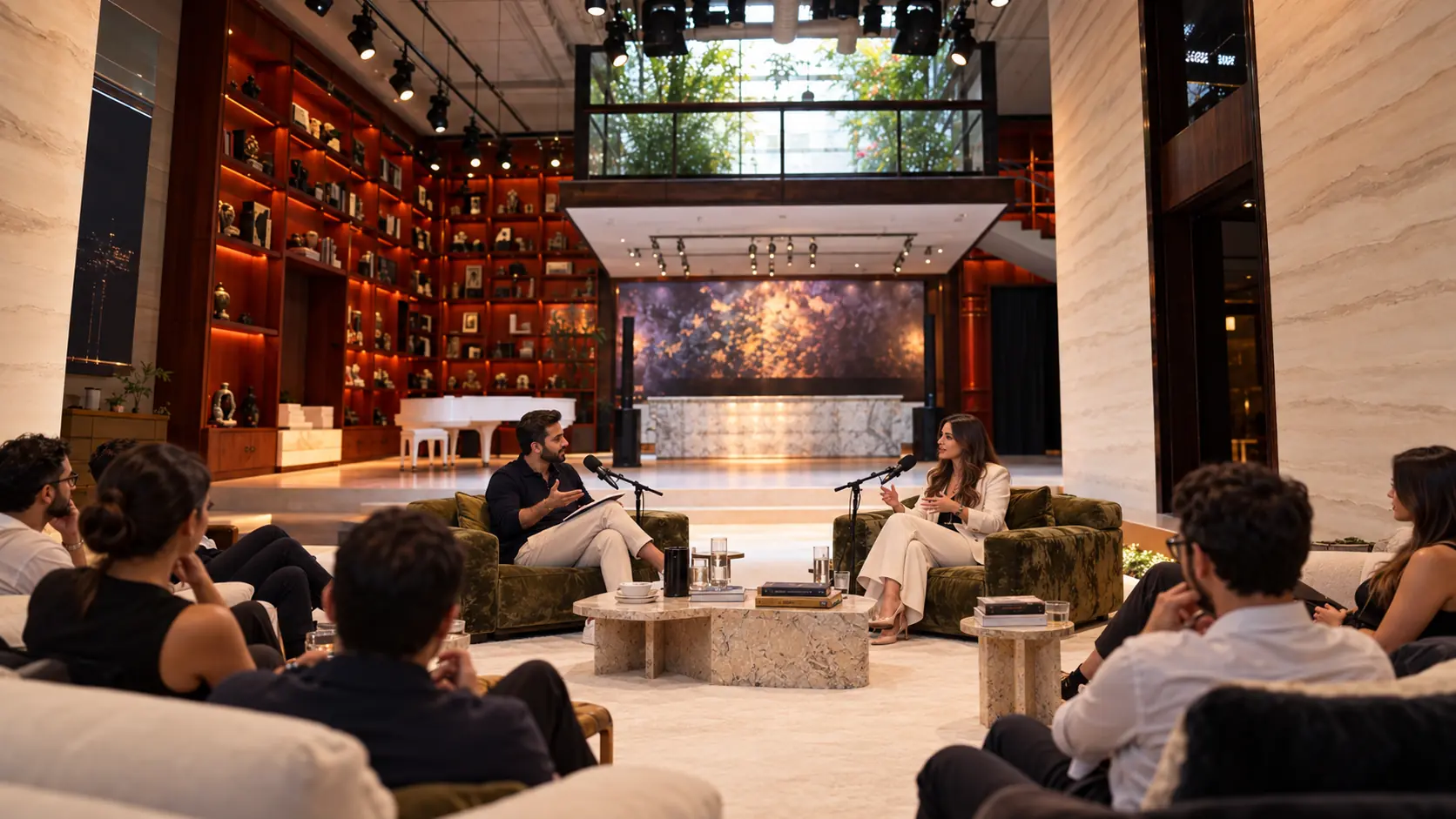
The host's preparation starts with the guest's actual work, so the proposed questions refer to decisions the speaker is equipped to explain. For a designer discussing a completed project, select a particular design decision and ask what changed during development. Published interviews offer background, but the preparation call can identify a detail the guest has yet to discuss. Agree on which supporting material the producer needs ahead of the event.
If an episode includes an image or physical object, the host needs to describe its relevant features for listeners of the audio edition. Acknowledge what the invited audience can see, then explain the details behind the question. For a photograph showing an earlier design, identify the pictured version when introducing it. The production brief needs the approved image file alongside permission for its intended use in the released episode.
Guests who hear an interesting answer often want to ask a related question immediately, which can interrupt the host's planned exchange. Explain the participation format in the opening welcome and allow the producer to collect questions during the interview. Written submissions offer an option for listeners who prefer to contribute through the host. If a question repeats an earlier point, the host can select another submission carrying a different line of inquiry.
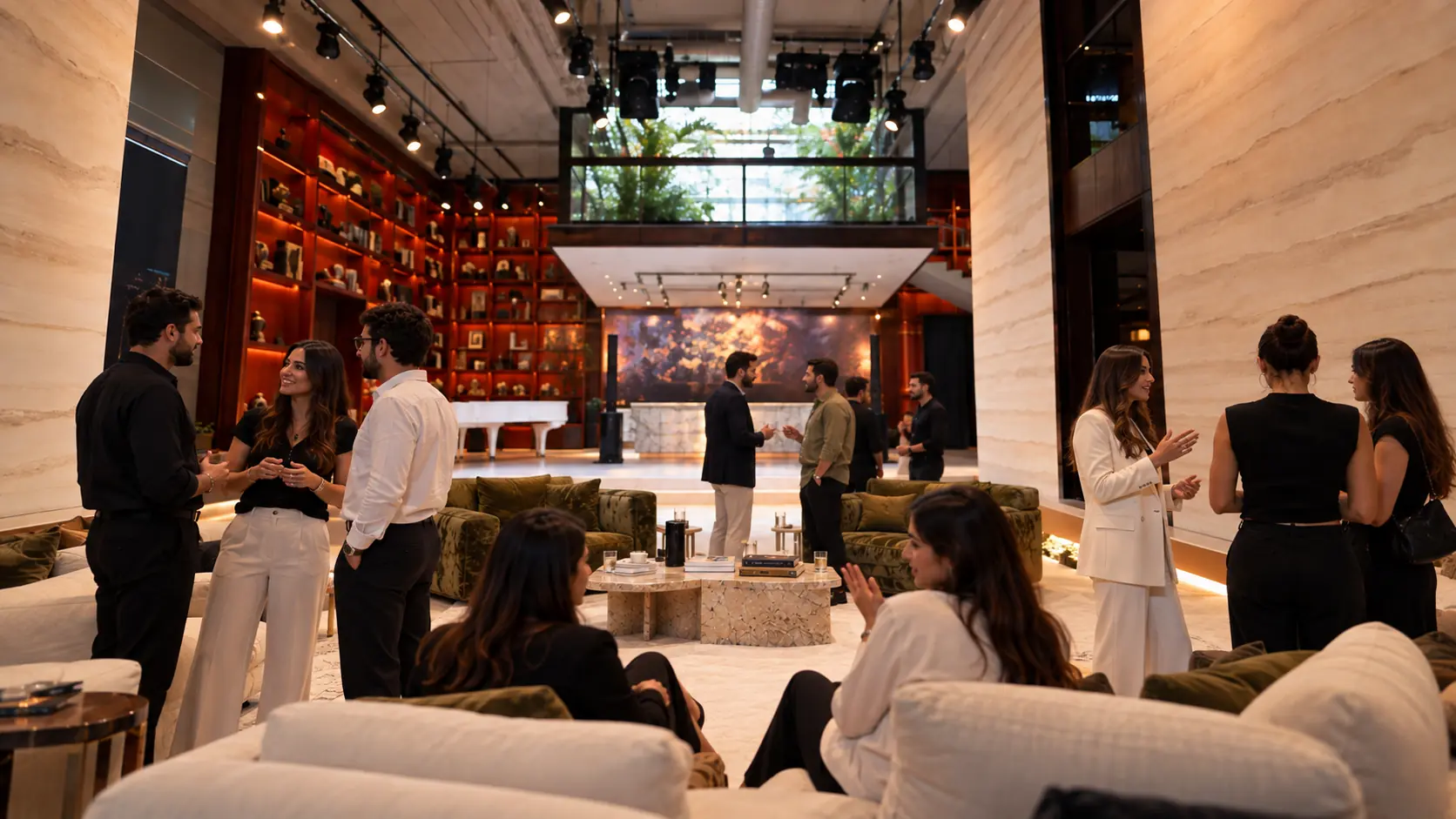
Someone's House's residential concept includes sofas and wood finishes within a privately reserved venue, so the production team starts with an existing interior. On the site visit, try the proposed speaker seats while a colleague checks the audience view. Microphones placed for the conversation need to remain usable when the speakers look toward their guests. Confirm any furniture movement with the House team ahead of the production date.
For a recorded conversation with a host and one guest, the camera operator needs a view of both speakers throughout their exchange. Audience seats belong in the same layout drawing as the camera positions. Once the production team proposes those positions, review the circulation routes with the venue and assess the actual attendance limit for the arrangement. Aisle access deserves particular attention if a microphone will travel between listeners during questions.
For the technical rehearsal, listen to a test conversation from the proposed guest seats and review its playback through the recording operator's headphones. The event requires an assessment of the audience's sound alongside the recorded material. Ask the operator to assess the microphones with the intended seating in place and the venue operating as it will during the event. Any proposed change to ventilation or other building systems requires the venue team's approval.
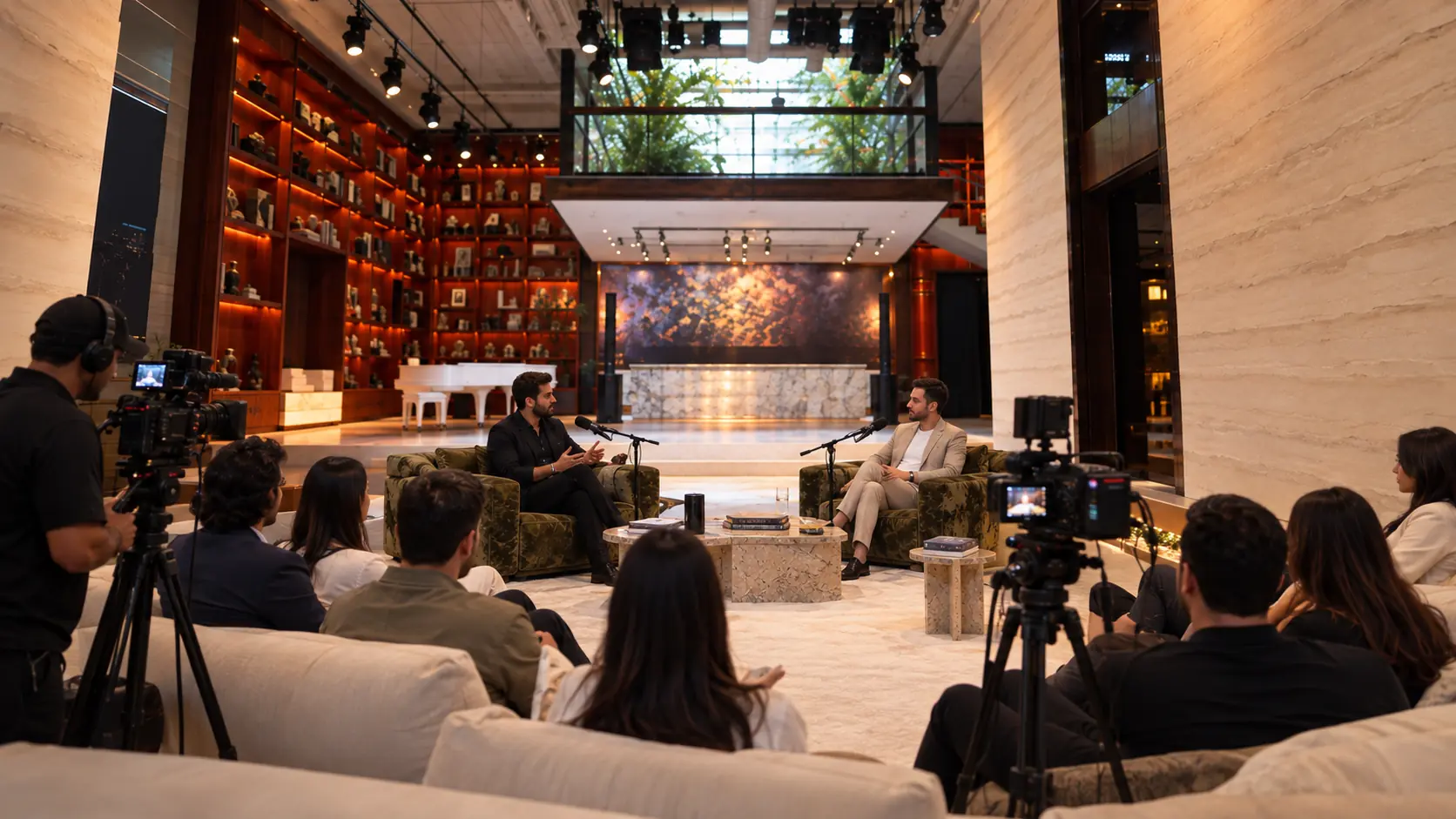
Someone's House's current production inventory lists a RØDECaster Pro alongside four Neumann BCM 705 microphones, with the event's actual allocation confirmed during planning. The list establishes installed equipment; your proposal still needs to specify the recording operator and the requested outputs. Discuss the complete microphone requirement when audience questions form part of the episode. Extra inputs or a different recording arrangement require confirmation from the technical team.
For video, the same inventory lists three Blackmagic Studio Camera 4K Pro cameras and an ATEM SDI Extreme ISO switcher. Request confirmation concerning the assigned cameras and the files included in the production delivery. If separate camera files are requested, the production agreement needs to identify those files alongside the agreed audio delivery.
Your rehearsal recording deserves to be played back while the speakers remain available, particularly when one person speaks softly or frequently looks toward the audience. Ask the host to begin a sample exchange and have a colleague pose a question from a guest seat. The operator can assess the change between the interview microphones and the audience microphone. Retain time for another test after any adjustment affecting the recording.
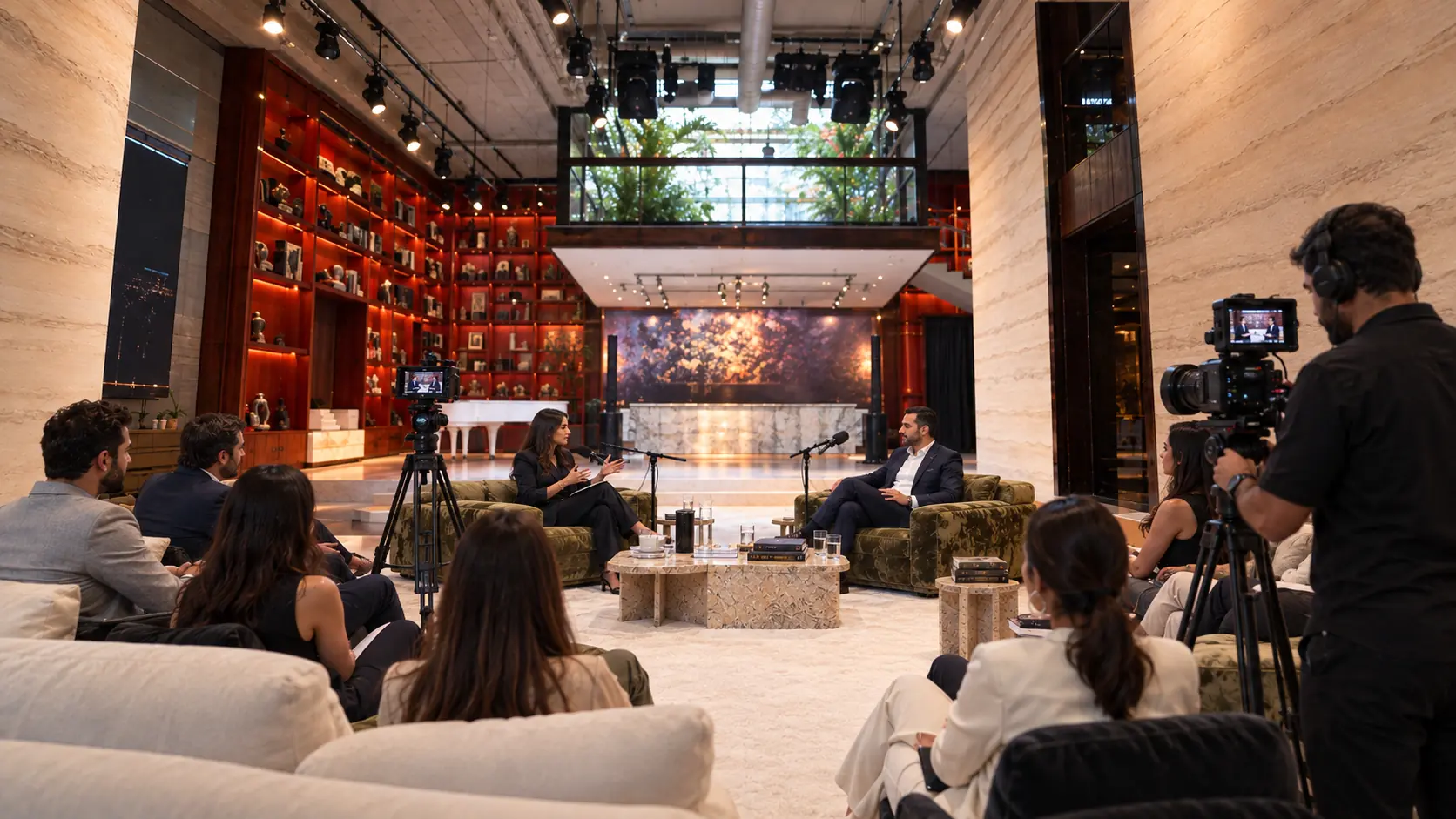
Shure's audio advice for filmed events describes two workable ways to record audience questions: take a microphone to the speaker or invite the speaker to a fixed microphone. For an invited podcast audience, choose the arrangement with the technical team against the proposed seating. Assign the microphone handover to a named crew member. The host can acknowledge the next question while the microphone reaches its speaker.
When a listener refers to something said earlier, the host may need to restate the relevant detail so the released exchange retains its meaning. Keep the speaker's actual question in the recording, with any clarification made during the conversation. For a question that concerns a visual reference, the host needs to describe the visible detail in the audio edition.
Invitation-only events still require a decision about the eventual audience for the recording, particularly when guests will appear in camera view or speak into a microphone. State the planned publication channels in the invitation and explain how audience contributions will be used. Your producer needs an agreed-upon method for receiving privacy requests before attendance. Camera positions can then be reviewed against those requests while the seating plan remains adjustable.
UAE personal data legislation includes voice and image among the elements that may identify a person, so the recording plan warrants a privacy review. Ask a qualified adviser to confirm the applicable legal basis for the proposed activity and the required participant information. Where processing relies on consent, Article 6 requires the responsible party to demonstrate it. The appropriate arrangements depend on the applicable law and the event's actual circumstances.
For the guest speaker's agreement, discuss the full episode and any proposed promotional extracts, especially when the subject includes unpublished work. Confirm the permitted material with the speaker or the relevant rights holder. If an answer includes information that requires factual confirmation, note the recording time for the editor. Release approval requires an identified decision-maker and an agreed-upon review period in the production proposal.
The audience arrival time needs to follow the technical rehearsal, with the host and guest ready to begin after listeners have taken their seats. Work backward from the proposed conversation's start to establish the crew's access requirement. Someone's House's booking information describes a finite reservation, so the agreed-upon hours need to accommodate preparation and final departure. Include any planned meals after the recording when discussing those hours with the team.
For a podcast followed by dinner, food preparation near the conversation needs to be discussed with the hospitality team during the site visit. Agree on which activities continue during recording and which belong in the interval. If the host plans a short pause between interview sections, the crew needs to know whether the microphones continue recording. The producer can use the pause to confirm the remaining audience questions with the host.
After the event, send the editor the complete conversation and production notes identifying any passages awaiting confirmation, in the file format agreed during preparation. Keep the question beside an answer whose meaning relies on it. For a shorter promotional extract, retain enough context to communicate the speaker's actual point. The episode's final approval should cover the edited audio alongside any requested video version.
W3C's transcript advice explains how text conveys speech and meaningful non-speech audio for people who rely on alternatives to listening. For a podcast transcript, identify the speakers and include relevant audience contributions. Publish the text where listeners can find it beside the episode. If an image carries information essential to the exchange, include a description in the accompanying text.
For a video release, W3C's caption advice describes text synchronized with speech and relevant sounds, with automatic output checked for accuracy. Review the guest's name and specialist vocabulary against the approved episode. Questions asked from audience seats deserve the same editorial check as the main interview. Supply the final captions with the release files so the publisher receives the approved text alongside the video.
Someone's House welcomes private podcast sessions as part of its media-event work, with the proposed recording assessed against the audience layout and production requirements. Send the intended date and attendance through the House booking page, together with an explanation of how listeners will participate. Your producer’s requested recording outputs should be included in the same brief, so the team can assess the work required within the reserved hours.