Blog


Plan a private book launch in Dubai with an author conversation and signing. Review the literary program and venue arrangements at Someone’s House in Al Quoz.
Readers attending a private book launch deserve time with the writing itself, especially when the invitation promises a conversation with its author. For a publisher comparing a book launch venue in Dubai, the first decision concerns the evening's format: a seated interview followed by a signing needs a different arrangement from a reception with a short reading. Someone’s House provides a private event setting on Al Khayat Avenue in Al Quoz. Inside its residential interior, invited guests can participate in a discussion and meet the author after the formal session.
The publisher's event brief needs to explain how guests will encounter the book during the evening's formal conversation and the reception following the interview. For a novel, an agreed extract might introduce a character whose choices become the interview's opening subject. Readers can then ask the author how the character developed during revision. If the launch concerns a translated edition, the translator's contribution deserves time in the program alongside the author's discussion.
Publishers and authors need an agreed appearance brief specifying the conversation's length and the signing period. Include the author's arrival time in the schedule, with a separate appointment for any press interview. If a translator will participate, establish their speaking role during the planning conversation. The invitation must describe the event guests will attend, especially when the author intends to discuss a particular edition or translation.
Penguin Random House’s guidance for author appearances distinguishes an interview format from a signing-only event and recommends coordination with the author's publicist. For a privately hosted launch, assign the publisher's contact responsibility for approving the event description. Use the approved book jacket and author biography supplied by the publisher's contact. Publication timing deserves a separate check: invitations announcing a launch need a confirmed edition and a realistic delivery date for physical copies.
Moderators need enough preparation time to read the book and develop questions concerning its particular narrative choices. Start with a passage relevant to the intended audience. What changed between the initial manuscript and the published version? How did the author decide whose perspective would carry a chapter? Questions grounded in the text allow readers to follow the discussion even when they have yet to finish the book.
The Open University’s guidance on chairing literary events recommends close reading and questions suited to the audience. As the conversation progresses, the moderator listens to the author's answers and develops relevant follow-up questions. Use a short question sheet as a reference, with the relevant page numbers beside proposed extracts. In the briefing, agree which plot developments belong in the discussion. For fiction, describe the event's approach to spoilers in the introduction. Memoir requires a different conversation concerning personal subjects the author has agreed to discuss.
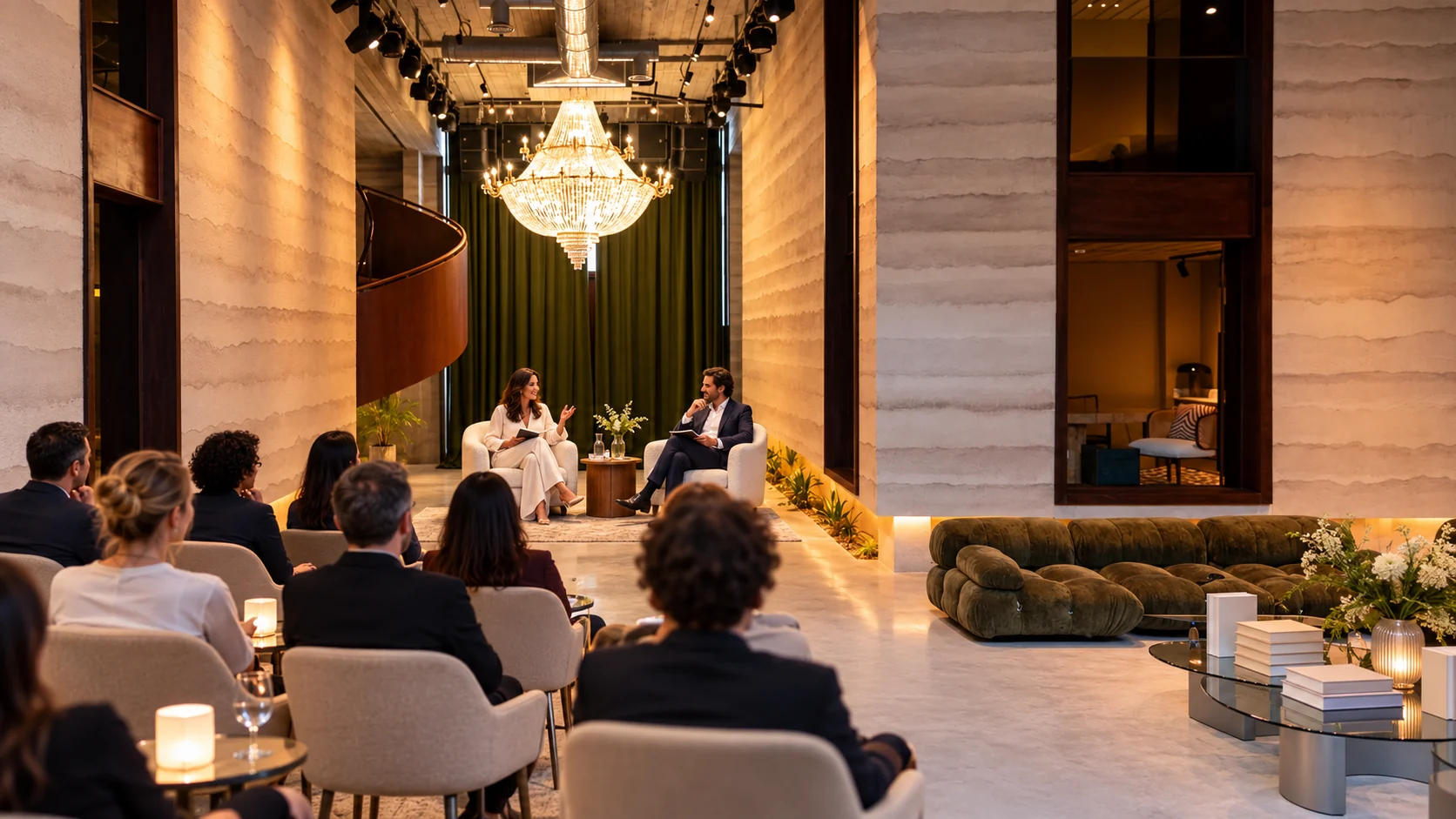
Seat the author and moderator at a slight angle toward each other, with a direct view from the audience's proposed seating positions. On the venue visit, check the view from an outer chair and the rear row. Low flowers beside the speakers' table leave their faces visible to guests seated near the front. Reserve a suitable position for anyone who requests an access accommodation, then review the route to that seat with the venue team.
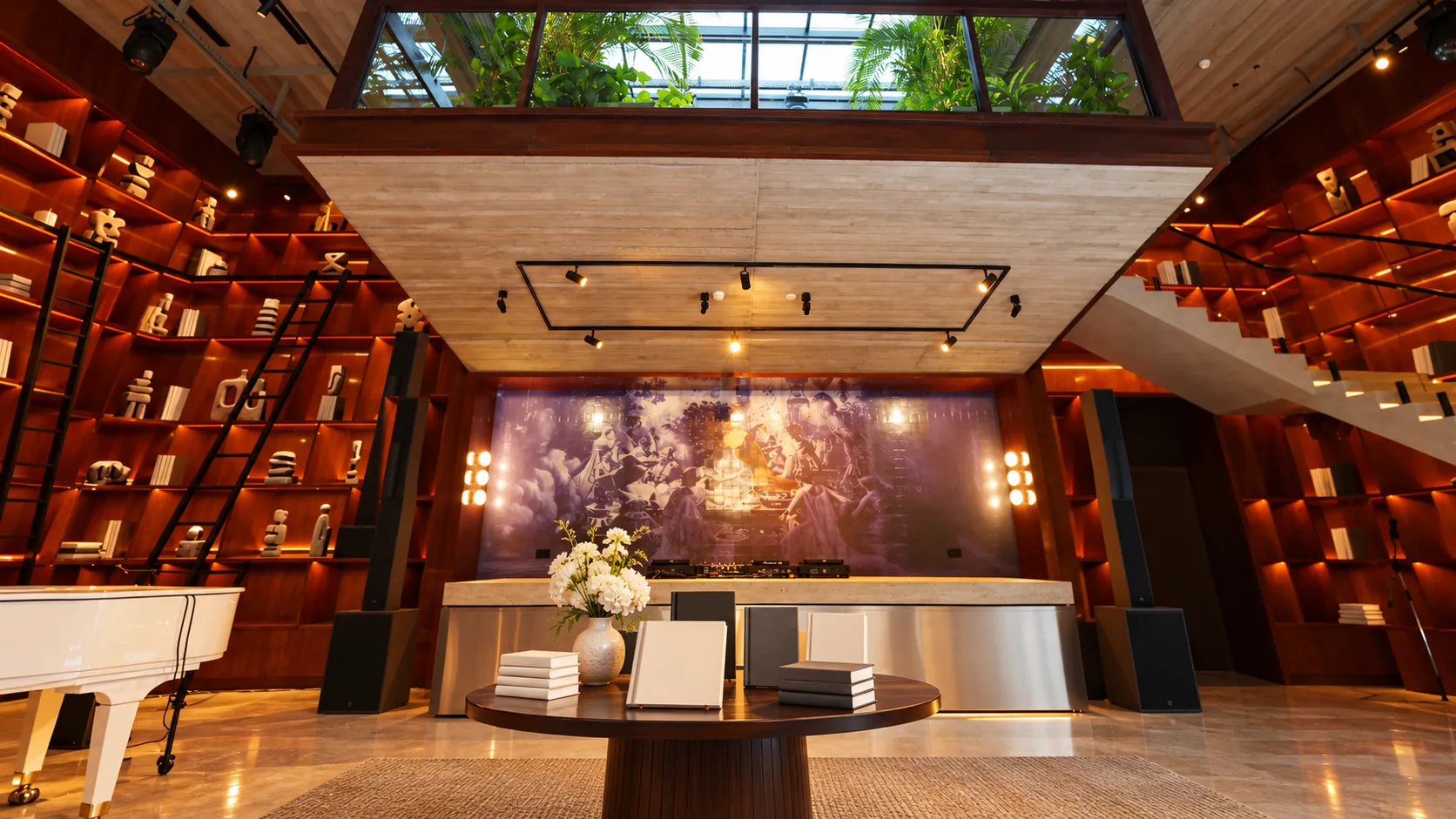
Someone’s House describes a private-event concept with a residential interior for invited guests who attend hosted gatherings. Request a seated layout for the actual audience count. The proposed signing route should pass clear of the speakers' chairs and leave space for guests who remain seated after the conversation. Ask the venue team to approve the proposed furniture and its placement within the final layout.
For the technical appointment, rehearse a short passage at the author's normal speaking volume in the planned seated position. Ask a colleague to listen from the farthest audience seat. The test needs to include the author's downward glance at the page, since a reading changes the distance between the mouth and a handheld microphone. Confirm the microphone arrangement with the technical team according to the actual program.
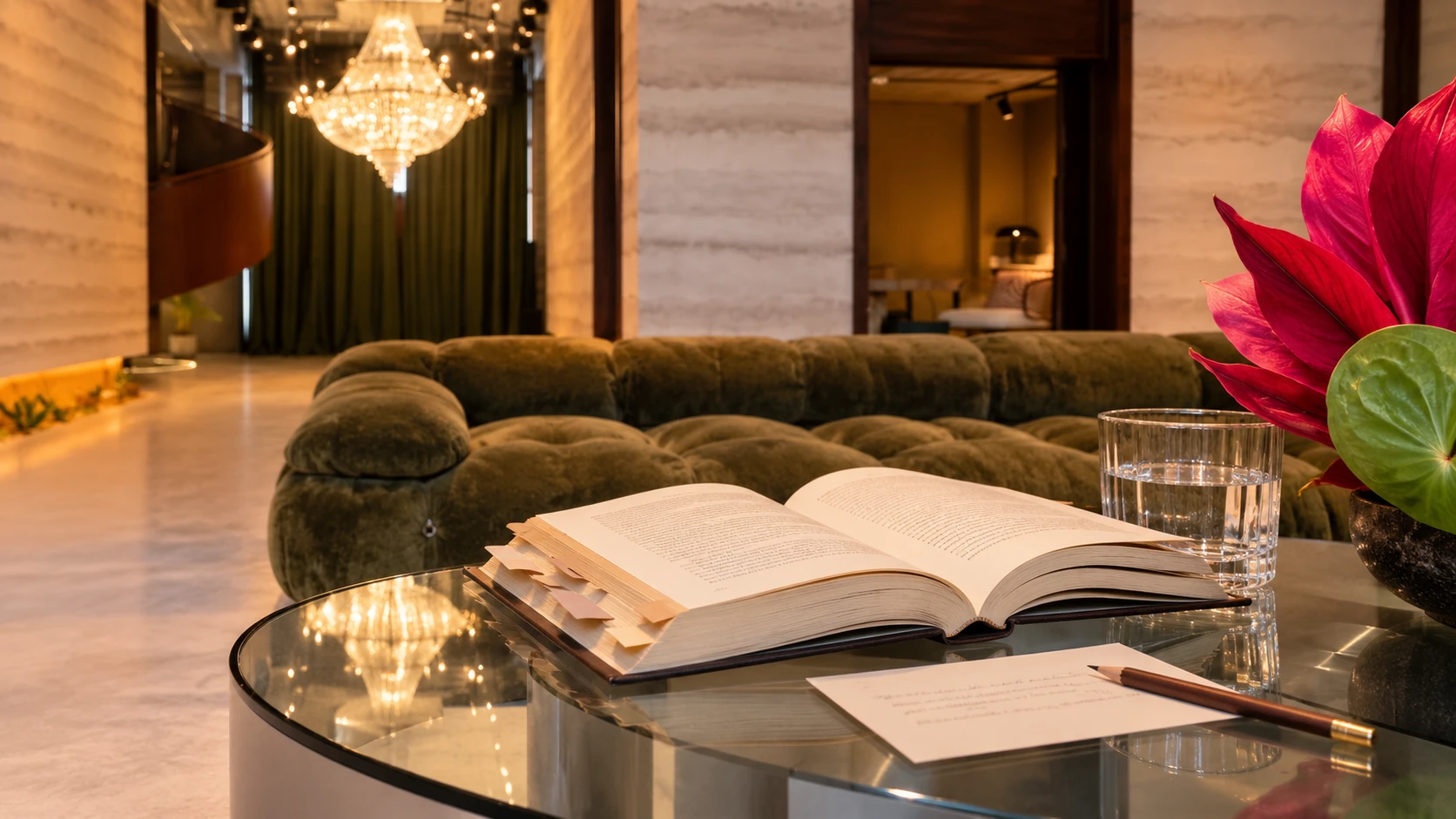
Page visibility deserves its own check when the evening uses lower ambient light around the audience. Place the reading copy where the author expects to hold it and test the light on the page. For projected illustrations, supply the approved file and confirm its display during rehearsal. Keep a printed reading copy available. Technical requests belong in the venue brief; specific equipment or recording arrangements require confirmation for the booking.
Guests often arrive with questions arising from a passage or a personal connection to the subject, so reserve a stated discussion period within the program. Brief the moderator on how questions will reach the author. For a seated audience, a staff member with a microphone needs a usable route between the chairs. Written question cards offer another option when the host expects guests to prefer submitting questions during the conversation.
If several guests raise the same subject, the moderator can ask a combined question and identify the point they share. Retain time for the author's answer when a question includes a lengthy introduction. The host's schedule needs a firm transition into the signing period, with the person responsible for that cue visible to the moderator. Discuss the closing question during rehearsal so the author knows how the formal session will end.
Physical copies require a delivery plan specifying the edition guests expect to receive and the quantity the publisher has agreed to supply. Confirm who will receive the cartons at the agreed access time. Copies intended as host gifts need separate allocation from books offered for purchase. If the event includes book sales, agree with the authorized bookseller who will handle the transaction and issue the relevant receipt. For bilingual editions, label the stock by language so the publishing assistant can retrieve the requested copy during signing. Keep any advance reading copies separate from the edition approved for guests.
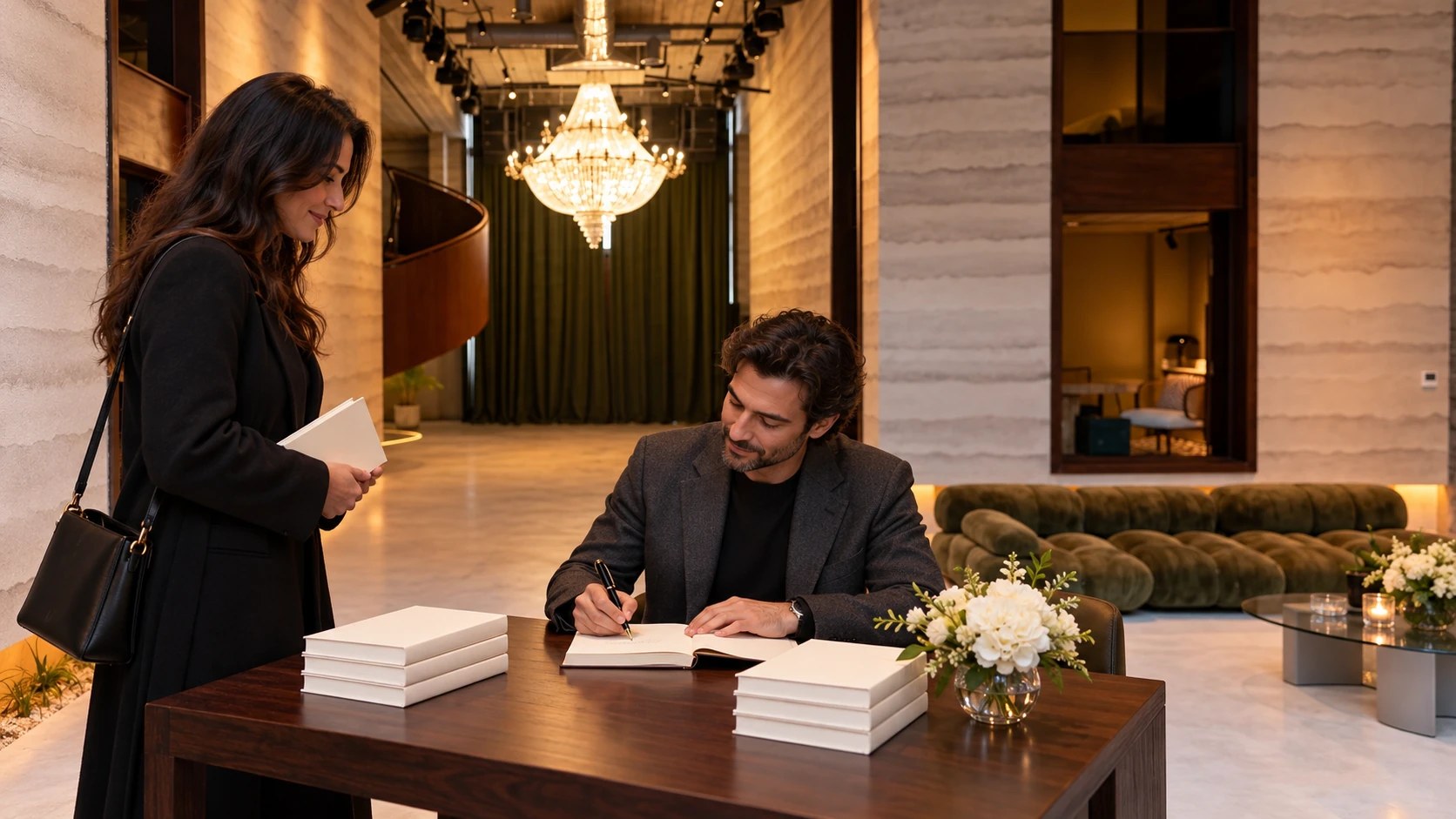
Position the signing table where a short queue can form after the seated discussion while other guests continue their conversations. Beside the author, leave space for an open book and a comfortable writing position. The publisher's assistant can organize copies awaiting signatures, with guests confirming the name a reader requests in an inscription.
Dubai's Department of Economy and Tourism provides an event-permit service covering business and entertainment events, which makes classification a necessary discussion for a commercial book launch. Its separate private-activity guidance concerns private events whose organizers receive zero financial gain. Ask the venue team to review the planned format with the responsible organizer. Share any proposed sales and public promotion during that review, then obtain confirmation of the applicable route ahead of the invitation mailing.
Invitation-only access still requires the responsible organizer to confirm the event's approval requirements for its actual activities. In the approval discussion, describe the author's appearance and any planned recording. Treat a change in the program as a reason to revisit the agreed arrangements. Retain the applicable approval documents with the venue booking record.
Publishers planning to release a recorded conversation need the author to approve the intended use and the passages selected for distribution. For an edited video, establish who reviews the cut and when the publisher expects to receive it. The production agreement should identify the party responsible for obtaining the relevant permissions. Explain photography arrangements in the guest information, with a contact for individual concerns.
Guests may struggle to hear a soft-spoken author when staff collect glasses or plates close to the speakers, so place the main hospitality period around the discussion. Agree on a pause in nearby clearing during the selected extract. For guests arriving after the conversation starts, assign a host to direct them toward an available seat at a suitable moment. Keep book cartons in an approved storage position until the publishing team needs the next supply.
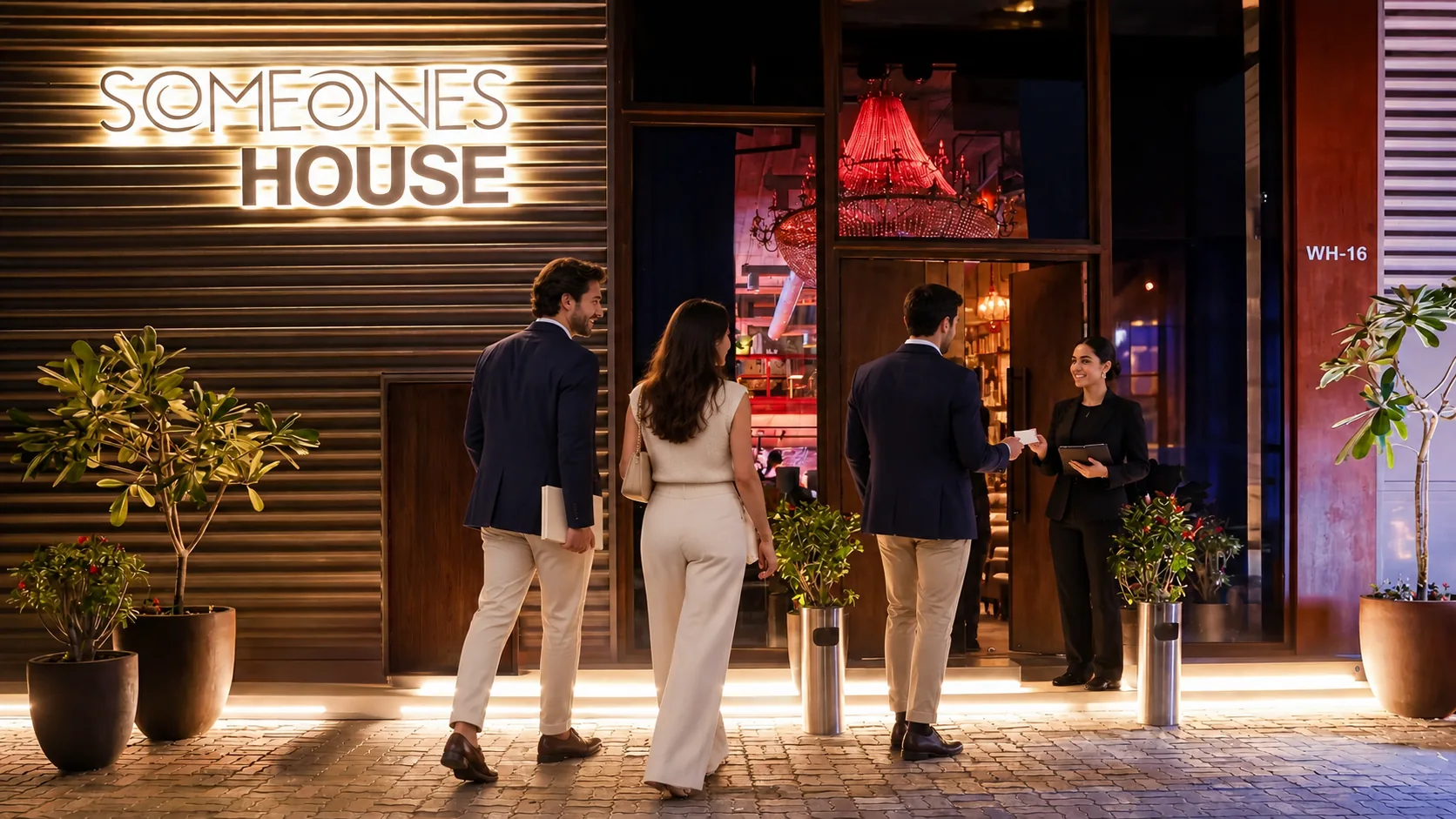
Someone’s House accommodates invitation-only cultural gatherings at Al Khayat Avenue, where hosts can plan literary conversations within a private event setting. Submit the proposed date and audience count through the House booking page. For the publishing team, specify the access time needed to arrange the books ahead of guest arrival. Display material belongs in the brief so the venue can review its placement alongside the seated arrangement.
Invite the author and venue contacts to a final production meeting once the moderator has prepared the interview questions. Once the meeting begins, settle any changes to the reading passage and the transition into signing. The publisher can then send the author a final program with the moderator's contact information and the agreed departure time. Keep a named publishing contact available during the signing period to manage any request for further copies or a change to the author's schedule.